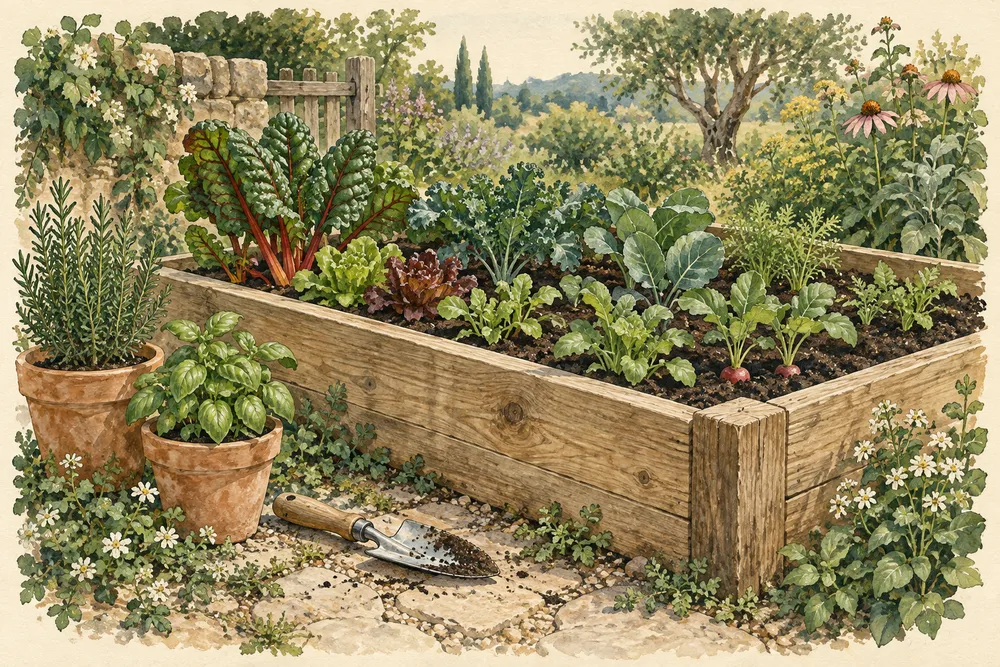
Measure your project
Measure inside the frame and subtract any occupied area. The checklist reminds you to check the frame, liner and delivery access. Add your own quantities for these items.
Measure the space you need to fill. Rectangles use length and width; circles use diameter. For several sections, choose combined areas and add rectangles, then subtract exclusions. The final area must be greater than zero.
Prepare the bed and the delivery
Measure inside the frame, check the existing fill level and plan the route from the unloading point. Advertised outside dimensions can overestimate the space available for soil.
The planner includes a preparation checklist with the fill and optional blend quantities. Add your own quantities for frame lumber, fasteners and liners before ordering.
Volume formula
Allowance applies once to each volume layer. No density or compaction factor is assumed. If buying by weight, enter the density for your supplier’s product in the units shown.
A worked example
An example 8-foot by 4-foot rectangle filled 12 inches deep needs 32.000 cubic feet, or 1.185185 cubic yards, without allowance. A 10% allowance gives 35 cubic feet. These are arithmetic examples, not recommended depths.
Calculate a two-component blend
Use internal bed or container measurements and the remaining depth to fill. An optional blend divides the total between two components at percentages you supply. The percentages must total 100. Full bags round up and may leave extra material.
Buying and checking quantities
Enter the volume printed on a bag, or its mass alongside supplier density. Counts round up to full bags. Costs use the purchasing unit and price you enter. Delivery is separate; labor and installation are outside this estimate. Copy or print your list to check with your supplier.
Sources & what they cover
- NIST SI conversion factorsNational Institute of Standards and Technology
Exact US customary and SI conversion factors; no material or installation recommendations.
Source checked - Raised bed gardensUniversity of Minnesota Extension
Raised-bed fill and distinctions between topsoil, compost and container media. No blend recipe imported.
Source checked
We check what each reference covers. A source check does not mean a specialist has reviewed this tool. You supply the depths, densities, prices and blend proportions.