Getting a useful estimate
Gaps between stones affect coverage. Check the coverage for your chosen size with the supplier before ordering.
Measure the space you need to fill. Rectangles use length and width; circles use diameter. For several sections, choose combined areas and add rectangles, then subtract exclusions. The final area must be greater than zero.
Choose the rock size before setting a depth
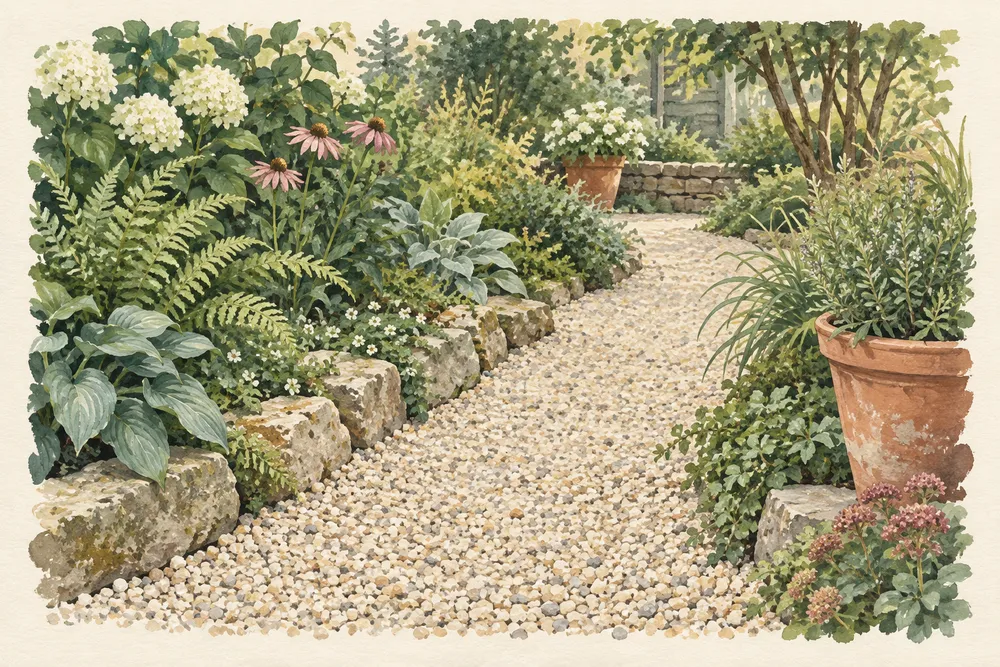
The linked supplier product contains stones approximately 1 to 3 inches across. “River rock” also covers other size ranges. A thin geometric layer may not represent complete coverage when the stones themselves are larger than the entered depth.
Ask for coverage at your chosen stone size and intended depth. Use that product’s bulk density for a weight order. Do not borrow the density of pea gravel or assume that every river-rock product covers the same area.
Measure only the area receiving stone
Subtract planted islands, stepping stones and other areas that will stay uncovered. Combined areas accepts rectangular exclusions. For curved borders, split the area into smaller measured sections and check the approximation.
A 10-by-6-foot area at an example depth of 3 inches contains 15 cubic feet, or about 0.556 cubic yards. That figure is an arithmetic estimate, not a promise of coverage for a particular rock size.
Check coverage as well as price
Compare the same stone size, color and product in each quote. Ask the supplier to reconcile your estimated volume with their coverage information before ordering. The quote comparison includes bulk delivery and minimum orders; taxes, pickup and unloading costs may need separate checks.
Volume formula
Allowance applies once to each volume layer. No density or compaction factor is assumed. If buying by weight, enter the density for your supplier’s product in the units shown.
Sources & what they cover
- NIST SI conversion factorsNational Institute of Standards and Technology
Exact US customary and SI conversion factors; no material or installation recommendations.
Source checked - Multi Colored River Gravel (1–3 inch)Gravelshop
One supplier’s larger rounded decorative stone; not a universal product specification.
Source checked
We check what each reference covers. A source check does not mean a specialist has reviewed this tool. You supply the depths, densities, prices and blend proportions.